Simplifying Complex Systems: My UX Journey in Redesigning HRMS at UNIF
Simplifying Complex Systems: My UX Journey in Redesigning HRMS at UNIF
Simplifying Complex Systems: My UX Journey in Redesigning HRMS at UNIF
A deep dive into how I redesigned the HRMS module for SRMU’s in-house ERP system, UNIF — focusing on simplifying workflows, aligning with user needs, and building a scalable design foundation for future modules.
A deep dive into how I redesigned the HRMS module for SRMU’s in-house ERP system, UNIF — focusing on simplifying workflows, aligning with user needs, and building a scalable design foundation for future modules.
A deep dive into how I redesigned the HRMS module for SRMU’s in-house ERP system, UNIF — focusing on simplifying workflows, aligning with user needs, and building a scalable design foundation for future modules.
What is Unif
What is Unif
UNIF is a powerful ERP solution developed by SRDT, an Oracle Partner, to simplify and automate core business processes — starting with Human Resource Management (HRMS). Designed for flexibility, UNIF supports customizable workflows, biometric and payment integrations, and policy-based automation to match diverse organizational needs.
Currently used by institutions like SRMU and LMRC, UNIF offers modules like Alumni, CRM, LMS, and more — making it a scalable platform that adapts as your organization grows.
In short, UNIF helps teams work smarter by automating routine tasks, improving accuracy, and freeing up HR professionals to focus on what truly matters.
As part of a broader initiative to modernize the UNIF platform, the HRMS module was selected for a UX and UI overhaul to meet evolving user needs and improve overall system usability.
UNIF is a powerful ERP solution developed by SRDT, an Oracle Partner, to simplify and automate core business processes — starting with Human Resource Management (HRMS). Designed for flexibility, UNIF supports customizable workflows, biometric and payment integrations, and policy-based automation to match diverse organizational needs.
Currently used by institutions like SRMU and LMRC, UNIF offers modules like Alumni, CRM, LMS, and more — making it a scalable platform that adapts as your organization grows.
In short, UNIF helps teams work smarter by automating routine tasks, improving accuracy, and freeing up HR professionals to focus on what truly matters.
As part of a broader initiative to modernize the UNIF platform, the HRMS module was selected for a UX and UI overhaul to meet evolving user needs and improve overall system usability.
UNIF is a powerful ERP solution developed by SRDT, an Oracle Partner, to simplify and automate core business processes — starting with Human Resource Management (HRMS). Designed for flexibility, UNIF supports customizable workflows, biometric and payment integrations, and policy-based automation to match diverse organizational needs.
Currently used by institutions like SRMU and LMRC, UNIF offers modules like Alumni, CRM, LMS, and more — making it a scalable platform that adapts as your organization grows.
In short, UNIF helps teams work smarter by automating routine tasks, improving accuracy, and freeing up HR professionals to focus on what truly matters.
As part of a broader initiative to modernize the UNIF platform, the HRMS module was selected for a UX and UI overhaul to meet evolving user needs and improve overall system usability.
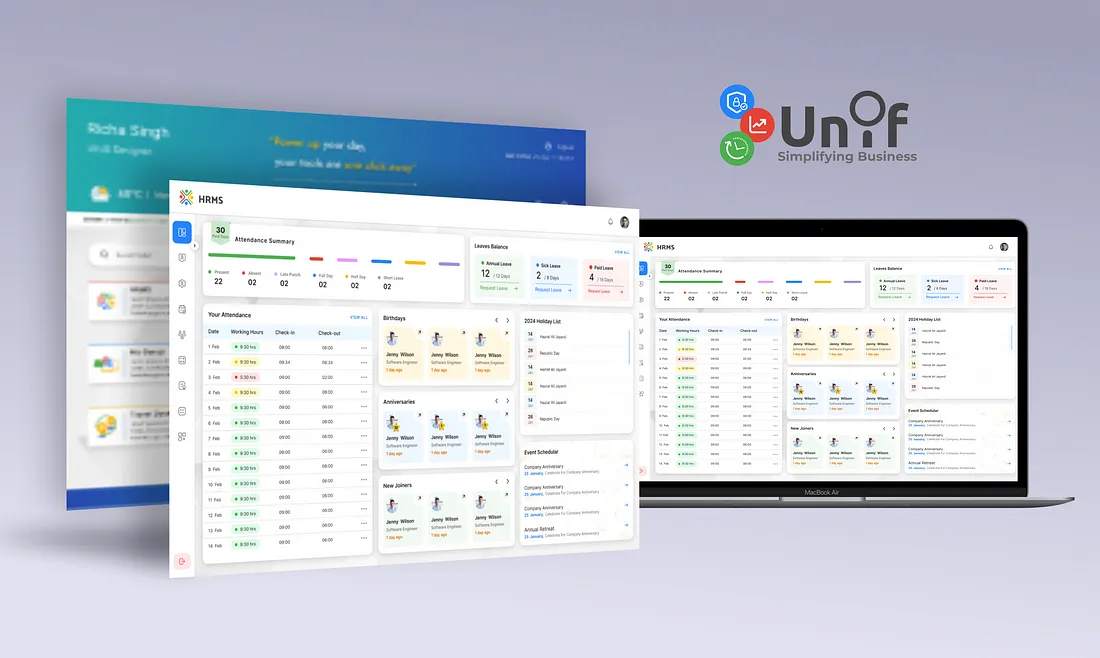
My Role in This Project
My Role in This Project

In this project, I worked as a UI/UX designer as part of a two-member design team responsible for redesigning the HRMS module of UNIF — SRMU’s enterprise resource planning (ERP) system. The goal was to simplify complex HR operations, enhance usability, and create a more consistent experience for administrators and HR teams.
I was actively involved throughout the design process:
Engaged with stakeholders and end users to understand real-world HR workflows and daily challenges

Audited the existing platform to uncover usability issues, gaps, and inefficiencies
Mapped user journeys and identified high-impact features based on usage patterns and operational needs
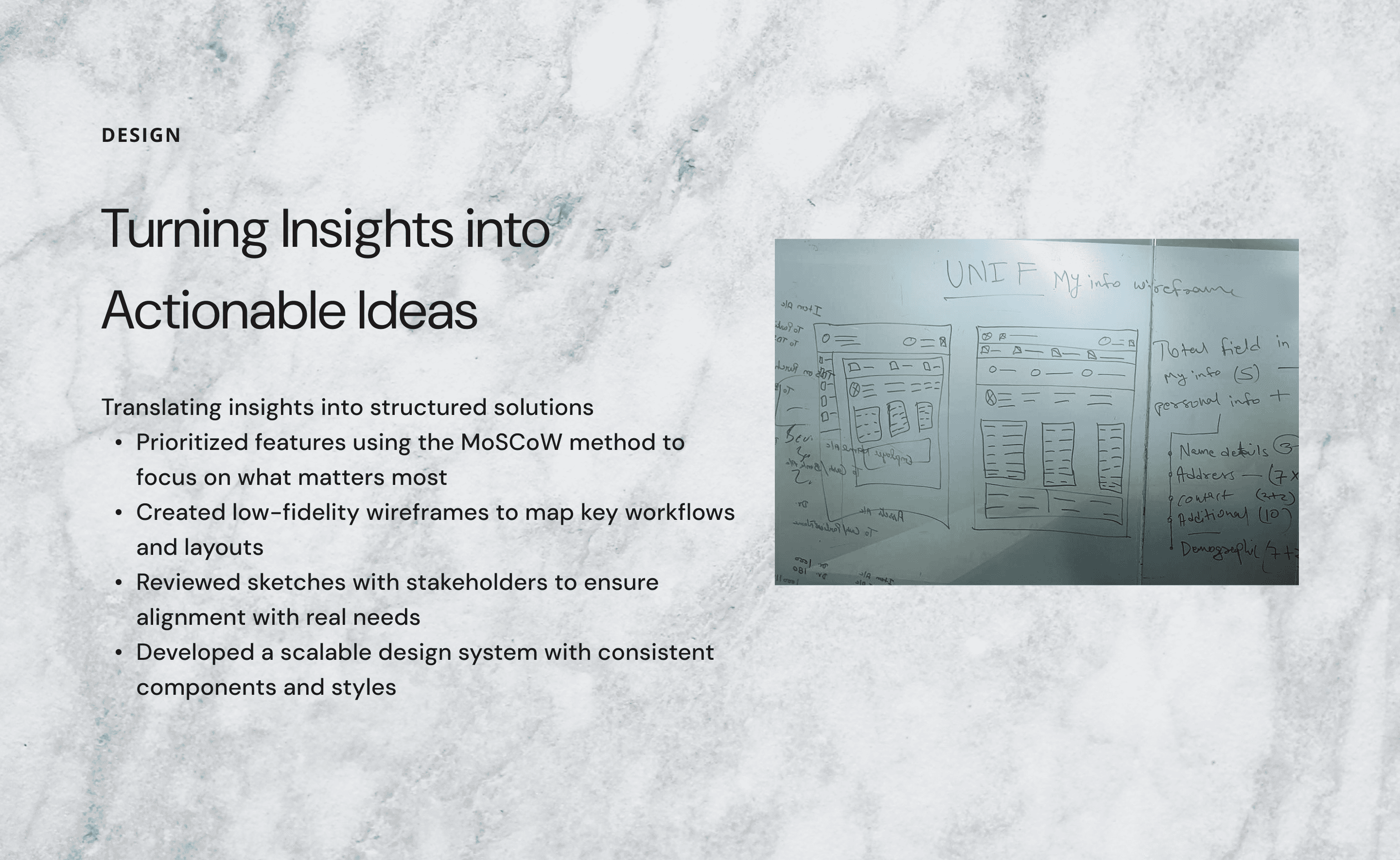


Designed wireframes and high-fidelity desktop screens with a focus on clarity, scalability, and visual hierarchy
Contributed to the creation of a modular design system to ensure UI consistency across the UNIF ecosystem
Collaborated with developers and product owners to align design goals with technical feasibility
This project gave me the opportunity to apply user-centered design in an enterprise context, solve real organizational pain points, and contribute to building a future-ready digital system that’s already in use by institutions like SRMU and LMRC.
In this project, I worked as a UI/UX designer as part of a two-member design team responsible for redesigning the HRMS module of UNIF — SRMU’s enterprise resource planning (ERP) system. The goal was to simplify complex HR operations, enhance usability, and create a more consistent experience for administrators and HR teams.
I was actively involved throughout the design process:
Engaged with stakeholders and end users to understand real-world HR workflows and daily challenges
Audited the existing platform to uncover usability issues, gaps, and inefficiencies
Mapped user journeys and identified high-impact features based on usage patterns and operational needs
Designed wireframes and high-fidelity desktop screens with a focus on clarity, scalability, and visual hierarchy
Contributed to the creation of a modular design system to ensure UI consistency across the UNIF ecosystem
Collaborated with developers and product owners to align design goals with technical feasibility
This project gave me the opportunity to apply user-centered design in an enterprise context, solve real organizational pain points, and contribute to building a future-ready digital system that’s already in use by institutions like SRMU and LMRC.
In this project, I worked as a UI/UX designer as part of a two-member design team responsible for redesigning the HRMS module of UNIF — SRMU’s enterprise resource planning (ERP) system. The goal was to simplify complex HR operations, enhance usability, and create a more consistent experience for administrators and HR teams.
I was actively involved throughout the design process:
Engaged with stakeholders and end users to understand real-world HR workflows and daily challenges
Audited the existing platform to uncover usability issues, gaps, and inefficiencies
Mapped user journeys and identified high-impact features based on usage patterns and operational needs
Designed wireframes and high-fidelity desktop screens with a focus on clarity, scalability, and visual hierarchy
Contributed to the creation of a modular design system to ensure UI consistency across the UNIF ecosystem
Collaborated with developers and product owners to align design goals with technical feasibility
This project gave me the opportunity to apply user-centered design in an enterprise context, solve real organizational pain points, and contribute to building a future-ready digital system that’s already in use by institutions like SRMU and LMRC.
The Process
The Process

Building the UNIF Design System
Building the UNIF Design System

A scalable UI foundation born right after the dashboard glow-up.
A scalable UI foundation born right after the dashboard glow-up.
A scalable UI foundation born right after the dashboard glow-up.
Once the dashboard layout and logo colors were locked in (and approved with the sacred words “yes, this looks final-final”), it was time to stop freestyling and start systematizing. After all, you can’t paint a mansion with random brushes. So, I began crafting a design system — not just to make things look consistent, but to save future-me (and the devs) from UI chaos.
Once the dashboard layout and logo colors were locked in (and approved with the sacred words “yes, this looks final-final”), it was time to stop freestyling and start systematizing. After all, you can’t paint a mansion with random brushes. So, I began crafting a design system — not just to make things look consistent, but to save future-me (and the devs) from UI chaos.
Once the dashboard layout and logo colors were locked in (and approved with the sacred words “yes, this looks final-final”), it was time to stop freestyling and start systematizing. After all, you can’t paint a mansion with random brushes. So, I began crafting a design system — not just to make things look consistent, but to save future-me (and the devs) from UI chaos.
Starting with the Basics
Starting with the Basics
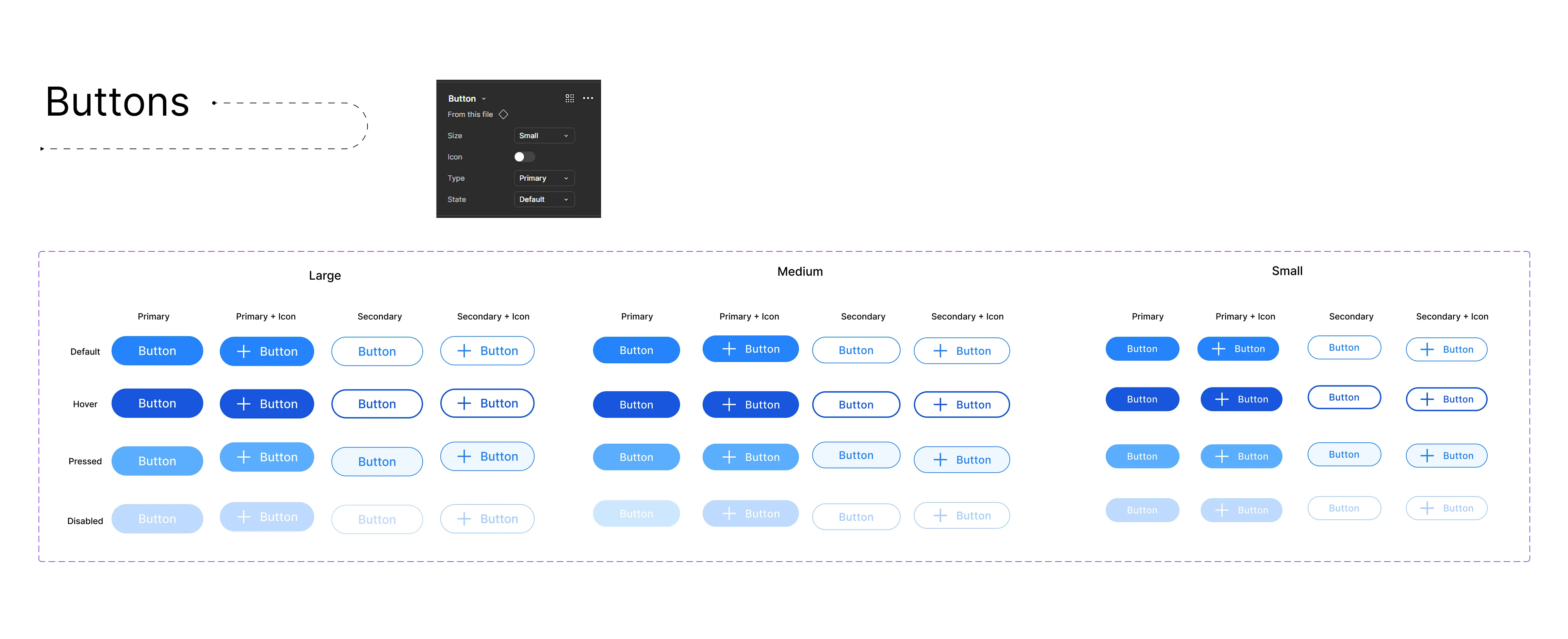
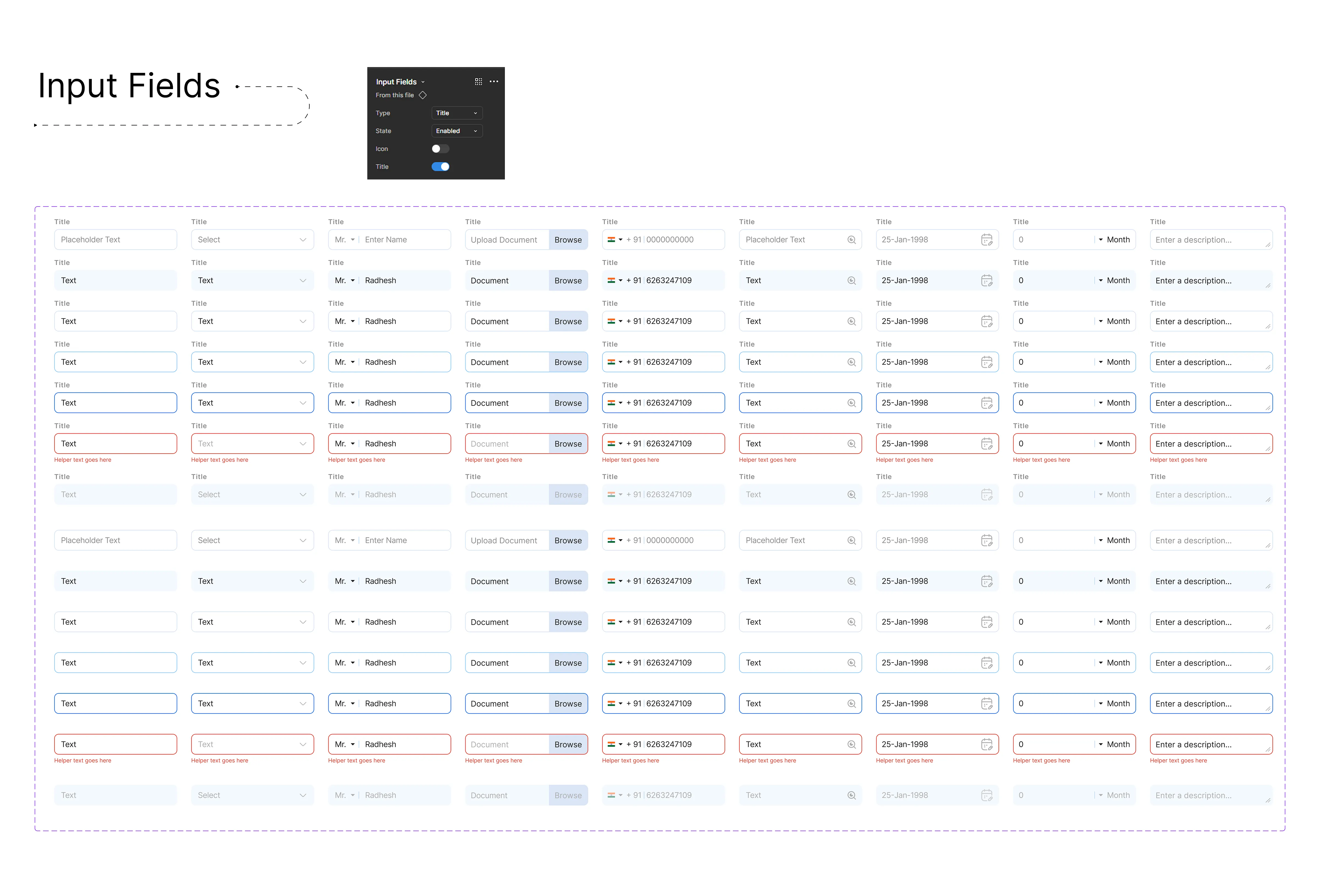
Before scaling, I focused on core UI components — buttons and input fields. These atomic elements set the tone for usability, accessibility, and interaction design across the platform.
Defined clear states (default, hover, active, disabled)
Maintained spacing & padding using consistent tokens
Built variations
Designed for responsiveness and ease of implementation.
Before scaling, I focused on core UI components — buttons and input fields. These atomic elements set the tone for usability, accessibility, and interaction design across the platform.
Defined clear states (default, hover, active, disabled)
Maintained spacing & padding using consistent tokens
Built variations
Designed for responsiveness and ease of implementation.
Before scaling, I focused on core UI components — buttons and input fields. These atomic elements set the tone for usability, accessibility, and interaction design across the platform.
Defined clear states (default, hover, active, disabled)
Maintained spacing & padding using consistent tokens
Built variations
Designed for responsiveness and ease of implementation.
Expanding the System
Expanding the System
Once the basics were locked in, the real fun began. I built out a full set of components covering all the UI patterns UNIF needed — from cards and tables to dropdowns, modals, and toggles.
Once the basics were locked in, the real fun began. I built out a full set of components covering all the UI patterns UNIF needed — from cards and tables to dropdowns, modals, and toggles.
Once the basics were locked in, the real fun began. I built out a full set of components covering all the UI patterns UNIF needed — from cards and tables to dropdowns, modals, and toggles.
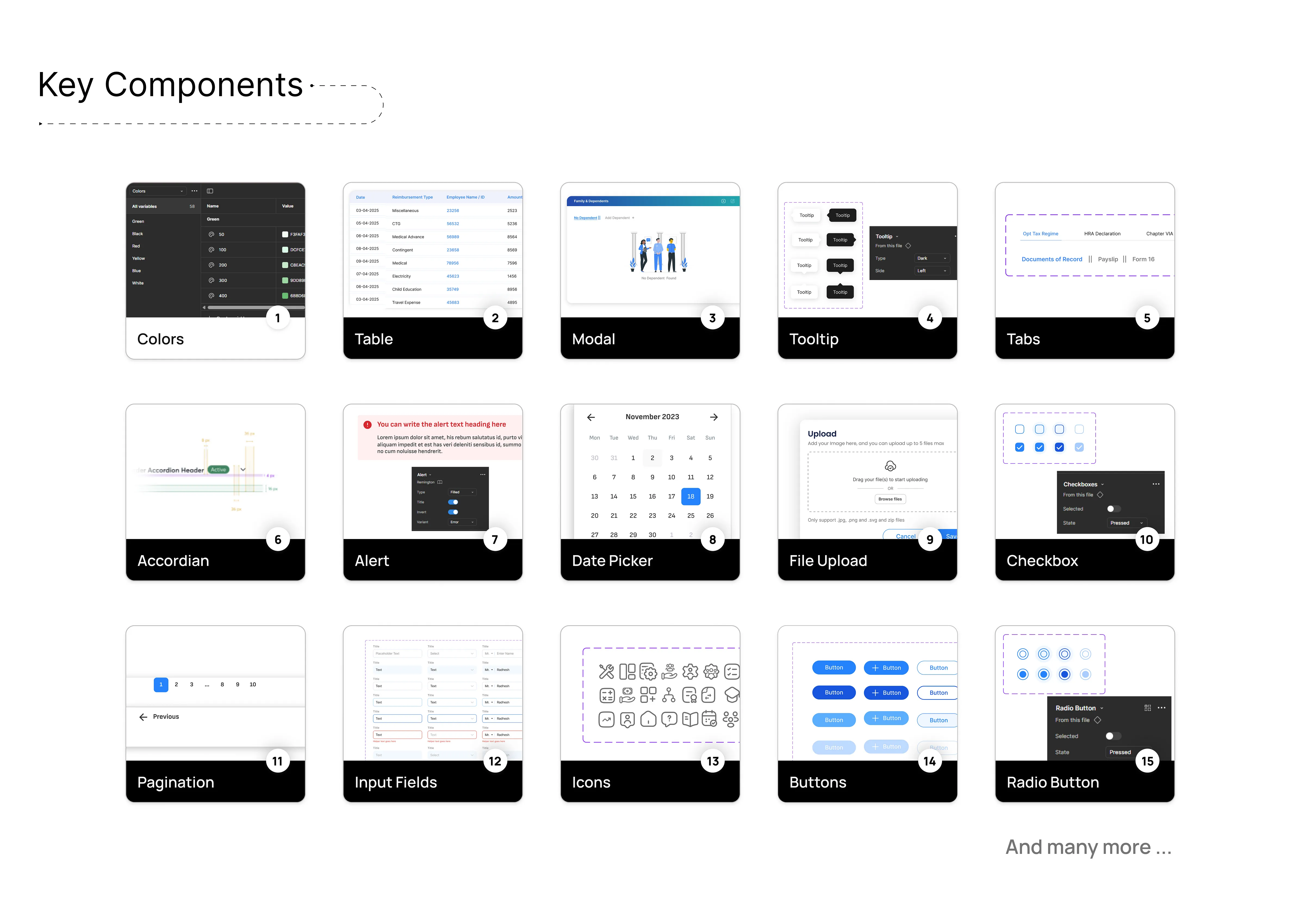
From tiny buttons to full-blown data tables, everything speaks the same design language
From tiny buttons to full-blown data tables, everything speaks the same design language
From tiny buttons to full-blown data tables, everything speaks the same design language
The design system became a shared language for designers, developers, and stakeholders — enabling consistency without slowing us down.
The design system became a shared language for designers, developers, and stakeholders — enabling consistency without slowing us down.
The design system became a shared language for designers, developers, and stakeholders — enabling consistency without slowing us down.
This isn’t just a visual upgrade — it is a design system built to grow with UNIF.
This isn’t just a visual upgrade — it is a design system built to grow with UNIF.
This isn’t just a visual upgrade — it is a design system built to grow with UNIF.